Free Web Submission http://addurl.nu FreeWebSubmission.com Software Directory www britain directory com education Visit Timeshares Earn free bitcoin http://www.visitorsdetails.com CAPTAIN TAREK DREAM: NASA

Showing posts with label NASA. Show all posts

Saturday, June 7, 2025

أومواموا الزائر الغامض Oumuamua

في إحدى أمسيات شهر أكتوبر من عام 2017، التقط تلسكوب Pan-STARRS في هاواي شيئًا لم يكن مُتوقعًا.

 كان مجرد نقطة ضئيلة تتحرك عبر السماء، لكن سرعان ما أدرك العلماء أنهم أمام اكتشاف غير مسبوق: جسم فضائي غامض دخل نظامنا الشمسي – قادِم من الفضاء بين النجوم.

معظم الأجسام التي نراها في الفضاء القريب (مثل الكواكب، المذنبات، الكويكبات) هي أشياء تنتمي لنظامنا الشمسي – أي أنها تدور حول الشمس أو كانت جزءًا منه منذ تشكله.

أما هذا الشيء، فقد جاء من خارج النظام الشمسي، من مكان مجهول في مجرتنا، وسلك مسارًا لم يتأثر بجاذبية الشمس إلا لحظة مروره بجانبها، ثم غادر سريعًا.

أومواموا هو أول جرم بينجمي معروف يمر عبر النظام الشمسي.

قد يكون الجرم كويكب صغير - أو ربما مذنب ويبدو أنه قد نشأ من خارج النظام الشمسي  قادم من مكان آخر في مجرتنا.

وإذا كان الأمر كذلك، فإنه سيكون أول جرم بينجمي يكتشف .

اكتشف في مسار قطع زائد من قبل روبرت ويريك في 19 أكتوبر 2017  بواسطة مقراب المسح البانورامي ونظام الاستجابة السريع.

عندما كان الجرم على بعد 0.2 و.ف (30,000,000 كيلومتر؛ 19,000,000 ميل) من الأرض.

وبالرغم من الأعتقاد المبدئي أنه مذنب اعيد تصنيفه ككويكب بعد أسبوع من إكتشافه.

مسار ʻOumuamua زائدي المقطع خلال النظام الشمسي الداخلي

أُطلِق عليه اسم أومواموا ʻOumuamua، وهي كلمة في اللغة الهاوائية تعني "الكشاف" أو "الرسول القادم من بعيد".

لكن ما أثار الرعب والدهشة معًا، لم يكن مجرد قدومه من خارج النظام الشمسي، بل سلوكه الغريب وشكله غير المألوف.

عمليات الرصد

قد يكون هذا الجرم أول عينة لجرم بينجمي ويبدو أنه نشأ من كوكبة القيثارة بمسار قطع زائد زادت سرعته عن 26 كم/ثانية بالنسبة للشمس.

هذا المسار على مقربة من النقطة التى تندفع نحوها المجموعة الشمسية وهو المسار الأكثر احتمالا لنهج الأجرام خارج النظام الشمسي. 

وبافتراض أنه صخرة وسطحه يعكس 10% من الاضاءة فأن قطره سيكون 160 متر تقريبا .

قياس الطيف المأخوذ من مرصد وليام هرشل في 25 أكتوبر أظهر أن الجرم أحمر مثل أجسام حزام كايبر.

فالجسم بدا أشبه بسيجار طويل ممدود، بطول يقدّر بحوالي 400 متر، ويدور حول نفسه بسرعة.

لكنه لم يكن يدور كالكواكب أو المذنّبات المعروفة، بل كانت دورته مضطربة ومتحولة، كما لو كان يتحرك بتوجيهٍ ذاتي أو خاضعًا لقوة لا نفهمها بعد.

موقع أومواموا في 25 أكتوبر 2017.

إستنباط المدار عكسياً يشير إلى أن الكويكب عبر خلال الحضيض في 9 سبتمبر 2017 ومر على مسافة 0.16 وحدة فلكية (24,000,000 كم؛ 15,000,000 ميل) تقريبا من الأرض في 14 أكتوبر 2017.

الجرم صغير وخافت، وقد تلاشى حاليا إلى القدر الظاهري 21.

قبل مائة عام، كان الجرم يقع على بعد يقارب 559 وحدة فلكية (84 مليار كم) تقريبا من الشمس مسافرا بسرعة 26 كم/ثانية بالنسبة للشمس.

استمر الجرم بالتسارع حتى مر من خلال الحضيض حيث بلغ ذروته عند 87.7 كم/ثانية.

وبحلول تاريخ الاكتشاف كان قد تباطأ إلى 46 كم/ثانية، وسوف يستمر في التباطؤ حتى يصل إلى سرعة تَطْواف بينجمية عند 26 كم/ثانية .

الأغرب من ذلك، أنه وبينما كان يبتعد عن الشمس، بدأ يسرّع حركته بشكل لا يمكن تفسيره بالجاذبية وحدها. لم يُلاحظ أي ذيل غازي خلفه كما يحدث مع المذنبات، ولم يُشاهد أي انبعاثات واضحة، ورغم ذلك... كان يتسارع.

سوف يخبو لمعان أمواموا إلى القدر الظاهري 34 بحلول عام 2020

أومواموا هو أول جرم بينجمي معروف يزور النظام الشمسي ويبدو أنه قادم من اتجاه نجم النسر الواقع في كوكبة القيثارة .

اتجاه حركة الجرم نحو النظام الشمسي تبعد 6 درجة من النقطة التى تندفع نحوها المجموعة الشمسية وهو المسار الأكثر احتمالا لنهج الأجرام خارج النظام الشمسي.

في 26 أكتوبر 2017، تم العثور على صورتي رصد سابقة من مشروع كاتالينا لمسح السماء مؤرخة بتاريخ 14 أكتوبر و 17 أكتوبر.

وأكدت عمليات رصد لقوس مراقبة أستمر لمدة أسبوعين شدة مسار القطع الزائد لهذا الجرم.

ما الذي يدفعه؟

ومن أين جاء؟

وهل كان حقًا مجرد حجر طائش من نجم بعيد... أم شيئًا آخر؟

بحلول منتصف نوفمبر، كان علماء الفلك على يقين من أنه بالفعل جرم بينجمي  وبناء على عمليات الرصد التي امتدت 34 يوماً، انحراف مدار أومواموا المركزي يبلغ 1.20، وهو أعلى مستوى مرصود على الإطلاق.

الانحراف فوق 1.0 يعني الجرم تتجاوز سرعة إفلات الشمس أي أن حقق سرعة الهروب من جاذبية الشمس وليس مقيداً بالنظام الشمسي وقد يهرب إلى الفضاء بين النجوم.

انحراف أومواموا عالي جدا لدرجة أنه لا يمكن اكتسابه من خلال لقاء مع أي من كواكب النظام الشمسي المعروفة أو غير المعروفة حتى الكواكب غير المكتشفة إن وجدت، لا يمكن أن تشرح "مسار أومواموا- أي كوكب غير المكتشف يجب أن تكون بعيد عن الشمس، وبالتالي يتحرك ببطء وفقا لقوانين كبلر لحركة الكواكب.

لقاءات مع مثل هذا الكوكب لا يمكن أن تعزز سرعة أومواموا إلى القيمة التي رصدت، وبالتالي فأن أومواموا لا يمكن أن يكون سوى من منشأ بين نجمي.

لكن ما زاد الأمر غموضًا هو أن تكوينه لا يُشبه أي جسم فضائي نعرفه. لا يشبه الكويكبات الصخرية، ولا المذنبات الجليدية، ولا حتى حطام النجوم المعروفة.

بدا وكأنه شيء خارج عن المألوف تمامًا، مصنوع من مادة أو تركيبة لا تتطابق مع أي مما رصدناه سابقًا.

دخل أومواموا المجموعة الشمسية من فوق مستوى مسار الشمس.

وأدى سحبه من قبل جاذبية الشمس إلى تسريع جريانه حتى وصل إلى أقصى سرعة له 87.71 كم/ثانية (196,200 ميل في الساعة) وأثناء مروره تحت مسار الشمس في 6 أيلول قام بانعطاف حادّ نحو الأعلى إلى أقرب نقطة له من الشمس (الحضيض) يوم 9 سبتمبر على مسافة 0.255 وحدة فلكية (38100000 كم؛ 23700000 ميل) من الشمس، أي حوالي 17٪ أقرب من حضيض كوكب عطارد .

ويتجه الجرم الآن بعيدا عن الشمس نحو كوكبة الفرس الأعظم بزاوية 66 درجة من أقرب نقطة وصل إليها من الشمس.

ولقد مر الجرم تحت مدار الأرض في 14 أكتوبر على مسافة حوالي 0.1616 وحدة فلكية (24,180,000 كم، 15,020,000 ميل) من الأرض، وعاد إلى أعلى فوق مسار الشمس في 16 أكتوبر ومر فوق مدار المريخ في 1 نوفمبر.

وسوف يمر فوق مدار المشتري في مايو 2018 ومدار زحل في يناير 2019 ومدار نبتون في عام 2022.

وسوف تستمر سرعته في الإنخفاض حتى تصل إلى سرعة 26.33 كم / ثانية بالنسبة إلى الشمس، بنفس السرعة التي كان عليه قبل إقترابه من النظام الشمسي  وسوف يستغرق الجرم حوالي 20,000 سنة لمغادرة النظام الشمسي تماماً.

التسمية

''قرر الاتحاد الفلكي الدولي أستخدام البادئة C / أو A / (حسب الاقتضاء)، لتسمية ألأجرام بين النجمية مع التعيين باستخدام نظام تسمية المذنب. وبناء على ذلك، يتلقى الجرم A / 2017 U1 التعيين الدائم 1I واسم (أومواموا) '''أوموموا'''.

وهو الإسم، الذي اختاره فريق بان-ستارس، مستمد من لغة سكان هاواي الأصليين والذي يعني المستكشف أو الرسول، أرسل من الماضي البعيد للوصول إلينا.

صبغة كويكبية

بعد اكتشاف هذا الجرم، تلقى تعيين مؤقت C / 2017 U1 وهذا التعين يخص مذنب. ولكن أظهرت الصور المأخوذة بواسطة المقراب العظيم في 25 أكتوبر، 2017 عدم وجود ذؤابة مذنب للجرم وأن له صبغة كويكبية كاملة لذلك غيرت البادئة الخاصة بالتعيين U1 2017 إلى A/.

تماشيا مع قرار الاتحاد الفلكي الدولي لعام 1995 الخاص بنظام تسميات المذنب .

قياسات الراديو

Artist's impression of ʻOumuamua

في ديسمبر 2017، استشهد عالم الفلك آفي لوب من جامعة هارفارد، وهو مستشار لمشروع Breakthrough Listen Project، بالشكل الممدود وبشكل غير عادي لأومواموا كأحد الأسباب التي تجعل تلسكوب جرين بانك في ويست فيرجينيا تحاول أن تسمع انبعاثات الراديو منه لمعرفة ما إذا كان هناك أي منها.

علامات غير متوقعة على أنه قد يكون من أصل اصطناعي،  على الرغم من أن الملاحظات المحدودة السابقة بواسطة تلسكوبات راديوية أخرى مثل مصفوفة Allen Telescope Array التابعة لمعهد SETI لم تسفر عن مثل هذه النتائج.

في 13 ديسمبر 2017 ، لاحظ تلسكوب جرين بانك الجسم لمدة ست ساعات عبر أربعة نطاقات من الترددات الراديوية. ولم يكشف عن أي إشارات لاسلكية من أومواموا في نطاق هذا المسح المحدود للغاية ، ولكن خطط لمزيد من المشاهدات.

ظهرت نظريات كثيرة لتفسير الظاهرة، بعضها كان علميًّا، وآخر اقترب من الخيال العلمي. من أبرزها:

أنه جسم جليدي غني بالهيدروجين يتبخر ببطء، مما يسبب حركة الدفع.

أو أنه شظية من كوكب غريب انفجر في مجرّة أخرى منذ ملايين السنين.

لكن النظرية التي أشعلت الجدل كانت من البروفيسور "آفي لوب" من جامعة هارفارد، الذي اقترح أنها ربما تكون مركبة فضائية ذكية أو شراعًا ضوئيًّا أطلقته حضارة متقدمة لاختبار أعماق الكون!

وبينما انقسم المجتمع العلمي بين الإنكار والانبهار، كان أومواموا قد مضى في طريقه عائدًا إلى ظلام الفضاء، دون أن يترك خلفه سوى أسئلة... لا إجابات.

حتى اليوم، لا أحد يعلم على وجه اليقين ما كان أومواموا بالضبط.

لكنه بلا شك، فتح أعيننا على احتمال أن نكون قد استضفنا، ولو لبرهة، زائرًا بين النجوم... غريبًا، صامتًا، وغامضًا بشكل لا يُصدق.

Monday, September 23, 2013

Exclusive: Creating electricity with caged atoms

Creating electricity with caged atoms

Clathrates: Tiny cages enclosing single atoms are shown

Clathrates are crystals consisting of tiny cages in which single atoms can be enclosed. These atoms significantly alter the material properties of the crystal. By trapping cerium atoms in a clathrate, scientists at the Vienna University of Technology have created a material which has extremely strong thermoelectric properties. It can be used to turn waste heat into electricity.

A lot of energy is wasted when machines turn hot, unnecessarily heating up their environment. Some of this thermal energy could be harvested using thermoelectric materials; they create electric current when they are used to bridge hot and cold objects. At the Vienna University of Technology (TU Vienna), a new and considerably more efficient class of thermoelectric materials can now be produced. It is the material's very special crystal structure that does the trick, in connection with an astonishing new physical effect; in countless tiny cages within the crystal, cerium atoms are enclosed. These trapped magnetic atoms are constantly rattling the bars of their cage, and this rattling seems to be responsible for the material's exceptionally favourable properties.

Cerium Cages from the Mirror Oven

"Clathrates" is the technical term for crystals, in which host atoms are enclosed in cage-like spaces. "These clathrates show remarkable thermal properties", says Professor Silke Bühler-Paschen (TU Vienna). The exact behaviour of the material depends on the interaction between the trapped atoms and the cage surrounding them. "We came up with the idea to trap cerium atoms, because their magnetic properties promised particularly interesting kinds of interaction", explains Bühler-Paschen.

For a long time, this task seemed impossible. All earlier attempts to incorporate magnetic atoms such as the rare-earth metal cerium into the clathrate structures failed. With the help of a sophisticated crystal growth technique in a mirror oven, Professor Andrey Prokofiev (TU Vienna) has now succeeded in creating clathrates made of barium, silicon and gold, encapsulating single cerium atoms.

Creating electricity with caged atoms

This is the Mirror Oven at the Vienna University of Technology, in which the novel material was created

Electricity from Temperature Differences

The thermoelectric properties of the novel material have been tested. Thermoelectrics work when they connect something hot with something cold: "The thermal motion of the electrons in the material depends on the temperature", explains Bühler-Paschen. "On the hot side, there is more thermal motion than on the cold side, so the electrons diffuse towards the colder region. Therefore, a voltage is created between the two sides of the thermoelectric material."

Experiments show that the cerium atoms increase the material's thermopower by 50%, so a much higher voltage can be obtained. Furthermore, the thermal conductivity of clathrates is very low. This is also important, because otherwise the temperatures on either side would equilibrate, and no voltage would remain.

The World's Hottest Kondo Effect

"The reason for these remarkably good material properties seem to lie in a special kind of electron-electron correlation – the so-called Kondo effect", Silke Bühler-Paschen believes. The electrons of the cerium atom are quantum mechanically linked to the atoms of the crystal. Actually, the Kondo effect is known from low temperature physics, close to absolute zero temperature. But surprisingly, these quantum mechanical correlations also play an important role in the novel clathrate materials, even at a temperature of hundreds of degrees Celcius.

"The rattling of the trapped cerium atoms becomes stronger as the temperature increases", says Bühler-Paschen. "This rattling stabilizes the Kondo effect at high temperatures. We are observing the world's hottest Kondo effect."

More Research for Better and Cheaper Clathrates

The research team at TU Vienna will now try to achieve this effect also with different kinds of clathrates. In order to make the material commercially more attractive, the expensive gold could possibly be substituted by other metals, such as copper. Instead of cerium, a cheaper mixture of several rare-earth elements could be used. There are high hopes that such designer clathrates can be technologically applied in the future, to turn industrial waste heat into valuable electrical energy.

EXCLUSIVE : Scientists explain the formation of unusual ring of radiation in space


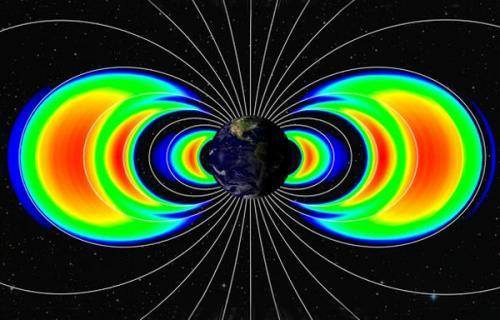
Since the discovery of the Van Allen radiation belts in 1958, space scientists have believed these belts encircling the Earth consist of two doughnut-shaped rings of highly charged particles—an inner ring of high-energy electrons and energetic positive ions and an outer ring of high-energy electrons.

In February of this year, a team of scientists reported the surprising discovery of a previously unknown third radiation ring—a narrow one that briefly appeared between the inner and outer rings in September 2012 and persisted for a month.

In new research, UCLA space scientists have successfully modeled and explained the unprecedented behavior of this third ring, showing that the extremely energetic particles that made up this ring, known as ultra-relativistic electrons, are driven by very different physics than typically observed Van Allen radiation belt particles. The region the belts occupy—ranging from about 1,000 to 50,000 kilometers above the Earth's surface—is filled with electrons so energetic they move close to the speed of light.

"In the past, scientists thought that all the electrons in the radiation belts around the Earth obeyed the same physics," said Yuri Shprits, a research geophysicist with the UCLA Department of Earth and Space Sciences. "We are finding now that radiation belts consist of different populations that are driven by very different physical processes."

Shprits, who is also an associate professor at Russia's Skolkovo Institute of Science and Technology, a new university co-organized by MIT, led the study, which is published Sept. 22 in the journal Nature Physics.
The Van Allen belts can pose a severe danger to satellites and spacecraft, with hazards ranging from minor anomalies to the complete failure of critical satellites. A better understanding of the radiation in space is instrumental to protecting people and equipment, Shprits said.

Ultra-relativistic electrons—which made up the third ring and are present in both the outer and inner belts—are especially hazardous and can penetrate through the shielding of the most protected and most valuable satellites in space, noted Shprits and Adam Kellerman, a staff research associate in Shprits' group.

"Their velocity is very close to the speed of light, and the energy of their motion is several times larger than the energy contained in their mass when they are at rest," Kellerman said. "The distinction between the behavior of the ultra-relativistic electrons and those at lower energies was key to this study." Shprits and his team found that on Sept. 1, 2012, plasma waves produced by ions that do not typically affect energetic electrons "whipped out ultra-relativistic electrons in the outer belt almost down to the inner edge of the outer belt." Only a narrow ring of ultra-relativistic electrons survived this storm. This remnant formed the third ring.
After the storm, a cold bubble of plasma around the Earth expanded to protect the particles in the narrow ring from ion waves, allowing the ring to persist. Shprits' group also found that very low-frequency electromagnetic pulsations that were thought to be dominant in accelerating and losing radiation belt electrons did not influence the ultra-relativistic electrons.

The Van Allen radiation belts "can no longer be considered as one consistent mass of electrons. They behave according to their energies and react in various ways to the disturbances in space," said Shprits, who was honored by President Obama last July with a Presidential Early Career Award for Scientists and Engineers.

"Ultra-relativistic particles move very fast and cannot be at the right frequency with waves when they are close to the equatorial plane," said Ksenia Orlova, a UCLA postdoctoral scholar in Shprits' group who is funded by NASA's Jack Eddy Fellowship. "This is the main reason the acceleration and scattering into the atmosphere of ultra-relativistic electrons by these waves is less efficient."

"This study shows that completely different populations of particles exist in space that change on different timescales, are driven by different physics and show very different spatial structures," Shprits said.

The team performed simulations with a model of the Earth's radiation belts for the period from late August 2012 to early October 2012. The simulation, conducted using the physics of ultra-relativistic electrons and space weather conditions monitored by ground stations, matched the observations from NASA's Van Allen Probes mission extraordinarily well, confirming the team's theory about the new ring.

"We have a remarkable agreement between our model and observations, both encompassing a wide range of energies," said Dmitriy Subbotin, a former graduate student of Shprits and current UCLA staff research associate.

"I believe that, with this study, we have uncovered the tip of the iceberg," Shprits said. "We still need to fully understand how these electrons are accelerated, where they originate and how the dynamics of the belts is different for different storms."

The Earth's radiation belts were discovered in 1958 by Explorer I, the first U.S. satellite that traveled to space.